
Shin guards may be one of the smallest parts of a football kit, but the rules treat them as essential protective equipment. Rather than naming a brand or universal shape, the law sets standards for material, size, coverage, and safety.
Understanding those standards helps players choose equipment that supports comfort and personal style without losing sight of its main purpose: reasonable protection during play.
Shin Guards Are Compulsory Equipment
Under Law 4 of the Laws of the Game, every player's compulsory equipment includes a shirt, shorts, socks, shin guards, and footwear. The guards must be made from a suitable material, be appropriately sized to provide reasonable protection, and remain covered by the socks.
This means football shin guards are not optional in an organised match. Match officials check that they are being worn and covered. However, the player remains responsible for deciding whether the chosen size and material provide suitable protection.
What Does "Appropriate Size" Mean?
The Laws do not prescribe one minimum length or width for every player. "Appropriate" must therefore be judged in relation to the individual, including the player's leg size, the area covered, and whether the guard stays correctly positioned during movement.
A sizing chart based on age or height can provide a useful starting point, but it should not replace a proper fit check. The guard should cover a meaningful section of the shin without pressing painfully into the ankle or knee. It should also sit securely beneath the sock instead of rotating, slipping, or leaving much of the shin exposed.
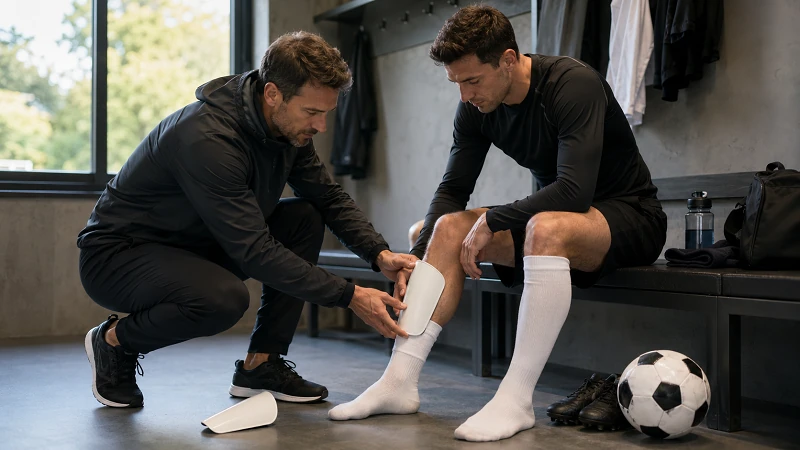
Very small guards may feel light, but comfort alone does not establish that they provide reasonable protection. Parents, coaches, and players should consider coverage as carefully as freedom of movement. Competition or national-association rules should also be checked because organisers may apply additional requirements.
What Counts as a Suitable Material?
The rule does not require one named substance. Modern guards may use rigid or semi-rigid shells, impact-managing foam, composite layers, or combinations of these elements. What matters is whether the complete product is safe, structurally sound, and capable of providing reasonable protection.
Material should never be considered in isolation. Shell shape, thickness, padding, coverage, and construction all influence how impact is spread across the lower leg. Published biomechanical research comparing shin guard designs found that the tested guards offered protection, while differences in materials and structural characteristics affected their protective performance under higher impacts.
Quality construction can improve comfort and durability, but no guard removes every risk from tackles or collisions.
Fit and Condition Matter as Much as Appearance
A well-designed guard must still be worn correctly. It should follow the shape of the shin, remain stable during running and turning, and fit fully beneath the sock. Sleeves or approved retaining methods can help prevent movement, provided nothing worn becomes dangerous.
Before every match, players should inspect custom shin guards for cracks, sharp edges, deep dents, separated layers, damaged padding, or distortion. A striking design should not distract from signs that the equipment needs replacement.
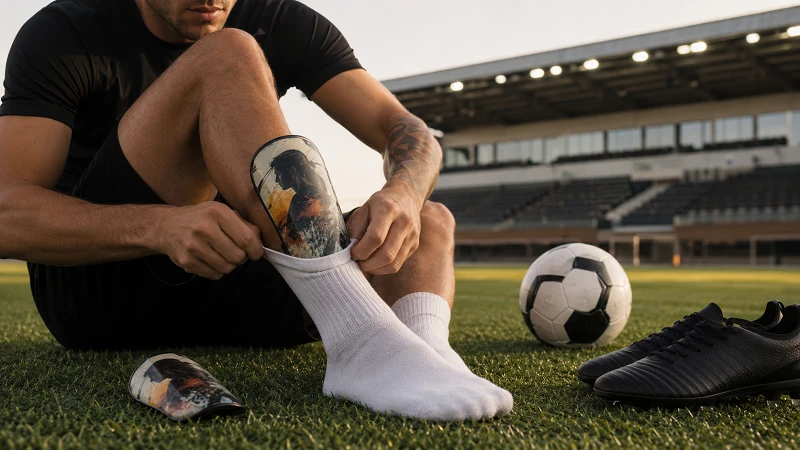
How Personalisation Fits Within the Rules
Personalisation allows protective equipment to carry identity and meaning. Shinster lets players upload their own photo, logo, or design and create guards made with premium materials. This makes photo shin guards an option for displaying a favourite memory, personal artwork, squad identity, or permitted team-inspired detail.
Players should still check the content before using a design in competition. Law 4 also restricts political, religious, and personal slogans, statements, or images on player equipment. It notes that details such as a player's name, number, team crest, and certain football-related emblems are usually permitted, but competition organisers may impose further limits.
A design being covered by socks should not be treated as automatic approval. Players should confirm local competition rules and obtain permission before using protected photographs, team marks, or third-party logos.
A Simple Pre-Match Equipment Check
Before entering the pitch, a player should confirm that:
- Both guards are present and free from dangerous damage.
- The size provides meaningful coverage for the individual leg.
- The material and construction remain firm and protective.
- Each guard stays securely in position.
- The socks completely cover the equipment.
- Any personalised content complies with competition rules.
Protection First, Personal Style Second
Football rules leave room for different sizes, materials, and designs, but they place responsibility on the player. The right pair should fit securely, cover an appropriate area, use suitable materials, remain in good condition, and comply with the relevant competition's equipment policies.
Players ready to combine practical protection with a meaningful personal design can explore Shinster and create a pair using their own photo, logo, or original artwork.